The highest natural point in the Maldives stands around 2.4 metres above the Indian Ocean. Its islands have an average elevation of 1 to 1.5 metres above sea level. Its people, about half a million of them, live on some 300 square kilometres of land, in an archipelago set across roughly 900,000 square kilometres of ocean.
Hold that picture, and then consider what passes through the wider Indian Ocean region. Before the disruptions of 2026, roughly 21 million barrels of oil a day passed through the Strait of Hormuz, while the Strait of Malacca carried more than 23 million. These arteries of global commerce connect the Indian Ocean to the energy security of much of the world, and their vulnerability has become clearer still during the upheavals of 2026. The sea lanes that join the two run past islands whose entire population would fit into one district of a major capital.
In the Indian Ocean, the smallest states sit beside the largest interests, and how they are treated will decide whether the region stays at peace.
First, small states are not passive. After an attempted coup in 1988, the Maldives asked the United Nations General Assembly to take up the vulnerability of small states. In December 1989, with the support of many other members, the Assembly adopted resolution 44/51 on their protection and security, without a vote. A country with limited military capabilities helped to change the terms of an international debate by insisting that the safety of the weak is a matter for common rules.
Second, small states act together. The Alliance of Small Island States, formed in 1990, has 39 members. Small island developing states contribute less than one per cent of global greenhouse gas emissions, according to the United Nations. Yet the goal of limiting warming to 1.5 degrees, written into the Paris Agreement of 2015, is there in large part because the Alliance, alongside other vulnerable countries and civil society, refused to accept a target that would have drowned them. Moral clarity, well organised, is a form of power.
Third, small states survive by balance. A state that depends on a single patron has sold its freedom of movement. One that keeps several relationships in good repair, and is honest with each about the others, keeps the right to decide for itself.
The strongest objection deserves an answer. Realists will say that agency is an illusion: when great powers collide, small ones are trampled, and no resolution of the General Assembly has ever stopped a warship. There is truth in this. Law does not enforce itself. But the record of the last thirty years shows small states shaping climate rules, maritime law and regional institutions out of all proportion to their size. They do not win by force. They win by making it costly, in reputation and in access, to ignore them.
The lesson for larger capitals is practical. Assistance offered as a move against a rival is recognised as such. Assistance that answers a real need, whether a sea wall, a hospital or a scholarship, earns a longer loyalty. And stability in a small state is rarely decided by navies. It is decided by whether young people have work, whether institutions are trusted, and whether communities can resist those who recruit for violence. This is prevention, and it costs a small fraction of what a crisis costs.
So here is a test for any power with interests in the Indian Ocean. Of everything you spend in the region, what share goes to the things its people have actually asked for? If the answer is embarrassing, the strategy is not working, however many ports it has secured.
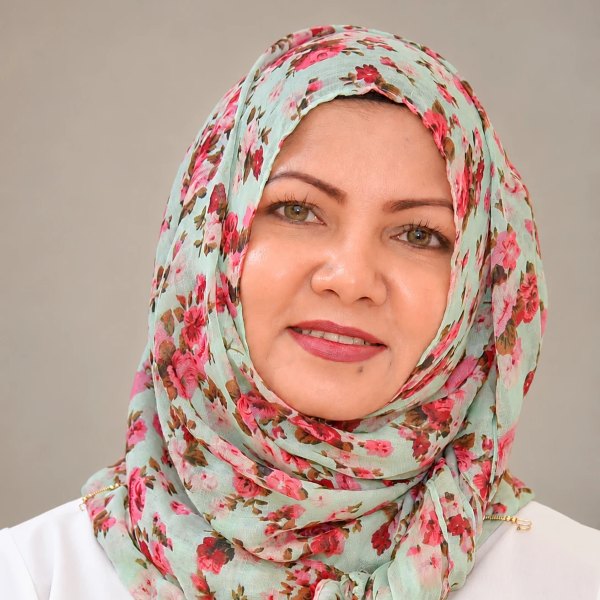
Dr. Aishath Rafiyya works on preventive peace: the geopolitics of small states, peace governance, hospitality as diplomacy, and technology and peace. The views expressed are her own.
Sources
- United Nations General Assembly resolution 44/51, "Protection and security of small States", 8 December 1989.
- Ministry of Foreign Affairs of the Maldives, Small States.
- US Energy Information Administration, Global Energy Security Data, 2026.
- United Nations, Small Island Developing States: Fast Facts.
- Alliance of Small Island States; Paris Agreement, Article 2.
- CIA World Factbook, Maldives.